
Most consumers have no idea how many hands touch their food before it arrives on a supermarket shelf. A bunch of grapes purchased in Paris on a Tuesday morning may have been harvested in South Africa two weeks earlier, packed in a certified facility, loaded into a refrigerated container, shipped across the Atlantic, cleared through customs in a European port, transported by road to a distribution centre, and then delivered to the store overnight. Every step in that journey involves a different set of actors, risks, and decisions.
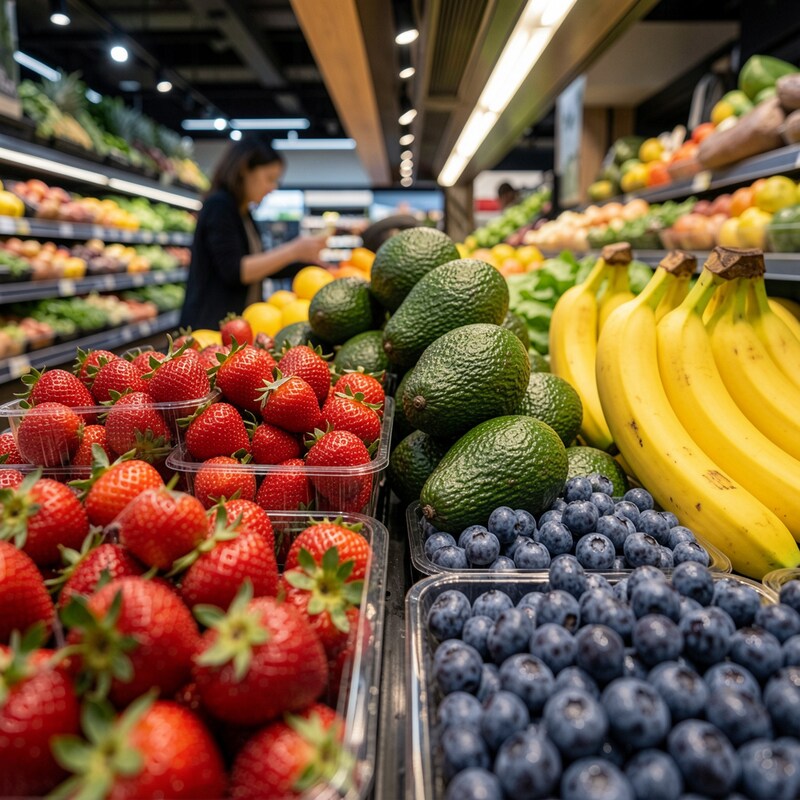
Understanding how global fresh produce supply chains actually function is essential for anyone working in import-export, retail procurement, or agricultural trade.
The chain begins at the producer — a farm or cooperative that grows, harvests, and packs the product to the buyer’s specification. Sizing, grading, labelling, and packaging all happen here, and any errors at this stage will travel all the way down the chain.
From the farm, product moves to a freight forwarder, who arranges the logistics: booking container space, coordinating refrigerated transport to the port, managing export documentation, and ensuring the shipment meets the phytosanitary requirements of the destination country.
At the origin port, product is loaded into refrigerated containers — known as reefers — set to the precise temperature required for the commodity in question. The vessel then travels to the destination port, where customs clearance, import inspections, and duty payment must be handled efficiently to avoid delays that cost money and freshness.
From the destination port, the product moves to a distribution centre — typically operated by the retailer or a third-party logistics provider — where it is quality-checked, broken down into store-level orders, and dispatched for final delivery.
A trade intermediary like Neriva Global sits across this entire chain — coordinating between producers, freight partners, customs agents, and retail buyers to make sure each handoff is clean, each document is correct, and each delivery meets the standard the customer expects.
It looks simple in a supermarket. Behind the scenes, it is anything but.